Matters of Custom and Convenience

Brake and Gas Pedal

I have to confess to a dirty little secret. Here it is: when I’m driving something with an automatic shift, I use my left foot to brake. Right foot goes on the gas pedal, of course. I think my dad taught me this way. My brother does the same thing. I don’t remember how my mom drove.

Of course, with a manual shift, I use my left foot for the clutch. So, with an automatic, it’s free for braking duties. The Car Talk guys allowed one time that left-foot braking allows the driver to brake more quickly, as long as said driver does not ride the brake. I don’t and never have.

Recently, though, I’ve wondered how hard it would be to switch the foot I brake with. So, I’ve been trying and it really feels strange. Of course, I’m working with a fifty-year-old habit here, so I’ll just have to see. I’ll let you know how it goes. Stay tuned!

Leave a comment

Filed under Uncategorized

The Dirt on Dirt

Pile of Dirt

I was looking around and found some interesting facts about our friend, dirt. Think it isn’t our friend? Try growing crops without it! (I know, there are hydroponic gardens, but really?)

70,000 different types of soil in the U.S.

1 tablespoon of soil has more organisms in it than there are people on earth

500 minimum years it takes to form one inch of topsoil

5,000 different types of bacteria in one gram of soil

.01 percent of the earth’s water held in soil

15 tons of dry soil per acre that pass through one earthworm each year

1,400,000 earthworms that can be found in an acre of cropland

20,000 pounds of total living matter in the top six inches of an acre of soil

10 percent of the world’s carbon dioxide emissions stored in soil

4,000 gallons of water soil needs to produce one bushel of corn

11,000 Gallons of water soil needs to produce one bushel of wheat

From magazine, June/July 2010


Leave a comment

Filed under Uncategorized

Blowin’ in the Wind (Or Not)

falling-leaves-connie-valasco

As I’ve written here before, we have a number of large oaks and maples in the the neigborhood and on our lot. The upside of so many mature trees is their beauty and shade, and watching them change through the seasons: the fresh green leaves in the spring, the coolness of their shadows in the summer, the spectacular display of color in autumn, and the stark beauty of black limbs against a wintry sky.

There are some downsides to having big trees around, of course. If they become diseased or die, they have to be removed, and that’s not a job for Harry Homeowner with his hand saw. A tree company charged over $1000 last time we had one taken out, but it was worth it to me to be able to live another day. It’s money well spent.

The other main downside comes when the leaves have fallen. I used to rake ours to the curb, where the City of Manassas picks them up with a great leaf vac that is very cool. After a few years, my back hurt badly even  after using an ergonomic rake (which I fondly referred to as my “snake rake). Fortunately, our nephew Jonathan Pankey, who has cut our grass for years, also takes care of fallen leaves. It’s not his favorite activity, but he and his crew come four or five times until all the leaves are gone. Jonathan and his helpers use leaf blowers, which is necessary because time is money in the business. I have to admit that the whine of a blower is far down the list of my favorite sounds. I recall the quiet and contemplative pleasure of raking leaves, back breaking as it was.

The New Yorker ran one of their incisive articles about the noise pollution of leaf blowers about three years ago, showing that I’m not the only one who doesn’t like the noise. Here’s a link to the story: http://www.newyorker.com/reporting/2010/10/25/101025fa_fact_friend .

I don’t begrudge my neighbors the use of these machines. Jonathan uses them, after all. I just wish there were a quieter way to get the job done. Ah, well, it’s not a perfect world we live in, and a little noise now and then is a small price to pay for all the gifts of trees.

Leave a comment

Filed under Uncategorized

The Party’s Over…

i-has-a-sad-cat

The World Series is over (how ’bout them Red Sox?!?), and the long drought sets in. Sure, there is what’s called the Hot Stove League where aficionados can sit around and talk about games past and speculate on the future of their teams (the Nats have a new manager! Yay! Hope for the future!), and we can watch replays of Nats games all winter, but it’s not the same as live baseball. This dearth of action on the diamond will last until about the middle of February, when pitchers and catchers report. Still, that’s three and a half months away. It’s going to be a long, cold winter.

So, friends, stock up on some good reads, build a fire in the fireplace, and settle in. Baseball is about hope and expectation. True, it will break your heart, but there’s always next year. And, in the words of the poet Shelley, If Winter comes, can Spring be far behind?


Leave a comment

Filed under Uncategorized

On Civility

Civility

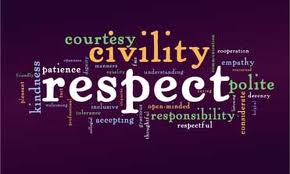
I saw a report on a news show recently about a grocery store located somewhere in the mid-West which was touted for the extreme politeness of its employees. People came from miles around to shop there because of the friendliness of the staff, and employees also traveled far to work there. Maybe I was missing something, but while the people in the store seemed friendly, they were no more courteous or friendly than the people I encounter as I go about my business here locally. At Food Lion or Rice’s or Barnes and Noble I’m always greeted warmly, asked how I can be helped and wished a good afternoon or evening as I leave. The staff at some of these places know my name and ask me about my family or my column. Around here, it doesn’t seem that much out of the ordinary. Most everyone I know is polite and considerate. To be sure, there is rudeness in the area, particularly on the highways, but by and large, we seem to have a tradition of civility.

I was thinking about the disconnect between my day-to-day experience and what seems to be the recent spate of people behaving badly—politicians, entertainers, sports figures, and ordinary citizens at various meetings and venues. Anger seems to be a common denominator to these demonstrations. Now, I’m no psychologist, but it seems to me that behind the anger lurks frustration, anxiety or general unhappiness. It would seem that if we want to reduce the level of anger and have civil discussions and civil behavior, we need to attend to whatever is fueling the ire in these people.

I became aware of this tendency to confrontation while I was still teaching English. I had one class that seemed fixated on having a debate. I couldn’t quite understand this since there is not a lot to debate in Early American literature. I was also puzzled that they wanted to use such a demanding and complex form. “Why do you want to have a debate?” I asked. “Because debates are cool,” they answered.

After a few times of their asking for a debate it began to dawn on me that what they and I had very different ideas of what a debate was. I asked them for an example of what they meant by a debate. “You know,” they said, “Like on The Jerry Springer Show.” I wasn’t familiar with this bit of broadcast media so I promised to watch an episode.

Well, I was appalled. I have never seen such a collection of dysfunction coupled with exhibitionist urges in my life. And not only was there shouting over each other, there were threats, fisticuffs, and the throwing of chairs. If this was what my students thought of as debating, they had been sorely misinformed somewhere along the line. I told them that if they worked hard, we would have a real debate if we had time at the end of the year.

We came to a point about three weeks before the end of the year where we needed something to wrap up our study of the literature. I told them we would end with a debate. I divided them into teams, and we spent a week going over ideas in American literature, looking for topics that would lend themselves to debate. They caught on to the concept with propositions like “The literature of an era reflects the important ideas of that era,” and “The correlation between an author’s work and life is clear.” Then it was off to the library to research their topics for a week and to prepare their arguments. I went over a simplified form for debate and by the last week of school, they were ready to present. They did a magnificent job. They had well-reasoned, well-researched arguments and listened, rebutted, and summarized like champions. I felt as if they had learned a great deal and had shown it. At the end of the time I asked, “So how did you like debating?”

“It’s a lot of work,” they answered, “But we learned so much.”

In America, perhaps more than any other place, we have a peculiar tension between individualism and the community. Individualism made our country what it is today, but sometimes at the expense of the community. When we work together, we can accomplish great things. Victory in World War II, the interstate highway system and the Apollo moon landing program come to mind as great achievements of Americans bending their efforts toward a common goal. We seem to do so when there is a threat, and certainly we never seem to lack for those. As the Beatles sang, we need to “Come together, right now!”

Leave a comment

Filed under Uncategorized

Transgression and Grace, or, Cutting Each Other Some Slack

Good advice for all of us!

Good advice for all of us!

I was thinking about rules the other day, for some reason, and I was minded of a quotation from Oliver Wendell Holmes, the great jurist, who declared, “The young man knows the rules, but the old man knows the exceptions.”

At an early age, we learn rules and consequences when we follow them and when we break them. I asked my daughter Amy, who is an ace fourth grade teacher if her students were big on following rules. Here is what she wrote:

Yes, unfortunately I am quite familiar with children who are big on following rules.

Mostly the kids get very upset if they think others aren’t following the rules. One example is the “calculator police” in my room. The kids haven’t really used calculators before this year, and get all upset if they think someone is using a calculator and they’re not supposed to be. We had to have a chat about how some people need the calculator and I’ve given them permission to use it. I said that fairness isn’t giving everyone the same thing: it’s giving everyone what they need to be successful!

They aren’t as bad about tattling as the younger grades are, but if they’re a little less mature, they do get upset when others don’t follow the rules!

Of course, rules and laws apply to us as we grow older and woe unto us if we disobey the rules and get caught. Traffic laws provide a nearly universal and daily example. Most drivers tend to driver a little faster than the speed limit, and most police tend to tolerate that as long as it’s not dangerous or what is called “too fast for road conditions.” There is an element of judgment in applying the law. When I got a speeding ticket a few years ago for going 40 in a 25-mph school zone (the lights weren’t flashing, honest), the judge dismissed the charge because of my good driving record. I had a social studies teacher back in the day who told us, “There is a reason for the law and reason within the law.” My experience in traffic court was a perfect example of this principle.

Baseball rules (of which there are many) are famously open to interpretation and can differ from day to day in their application. A young player who “shows up” an umpire by protesting strikes is likely to find himself not getting the close calls. There are consequences. Some people have asked why the game doesn’t use a Pitch-Trak to call balls and strikes. There are entirely too many variables, especially in close plays on the bases. There is a reason for the rule, and reason within the rules indeed.

Human relationships are perhaps the most important arena where grace and judgment must be used. We hurt each other, mess up, and generally make a hash of things. All this is going to happen and when it does, it can destroy a relationship–or we can offer each other grace, understanding, compassion and empathy and go on together. Holding grudges, as someone wisely said, hurts us more than it hurt the person we hold a grudge against.

I pray for each of us that we are familiar with the rules, and, more importantly, how to use them to build others and ourselves up and not to tear down and destroy.

Leave a comment

Filed under Uncategorized

Friday’s Poem of the Week

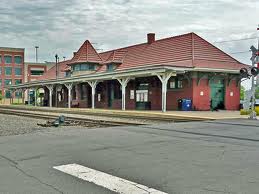
Manassas Train Station

A while back, I wrote this for my friends in Write by the Rails. It seemed particularly appropriate the week my first novel was released. Here’s to you, my friends and compères:

Write by the Rails

a poem of appreciation

Here’s to you, my colleagues, my friends,
My companion toilers in silence and solitude,
In appreciation for a shared vision
A shared divine madness
For this most peculiar enterprise.
For times and ideas shared
For afternoons spent talking at tables
For nods of comprehension
And smiles of recognition
Stories shared, pasts remembered
Futures imagined
We who are so different
Who animate our singular kingdoms
Of the mind and heart
And yet who move in a great swell
Together forward.
Forward.

-Dan Verner, April, 2013

Leave a comment

Filed under Uncategorized

Digging to China

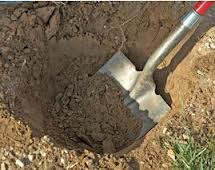
Digging a Hole

I saw a while back that Google Earth had added a new feature that allows users to dig a virtual hole from any spot on earth and see where they would come out on the other side. This reminded me of a popular belief when we were kids that if you dug a hole straight through the earth, you’d end up in China. Somehow, this benighted idea included everyone and everything being upside down on the other side of the earth. Now, I don’t think we were especially stupid or even in the magical stage of cognitive development, but a few minutes with a globe and recall of the facts of gravity would have shown us just how dumb these ideas were. And we weren’t little kids at the time. I remember being about ten years old and thinking this.

For the record, if we were to dig straight through the earth from this location, we’d end up in the ocean somewhere south-south-west of Australia. To come up in China, you’d have to start in Argentina. Not that we let facts get in our way.

One of our favorite places to play was a large vacant lot a couple of houses down from my house. We met there and played all kinds of games, mostly involving throwing things at each other. And of course at some point we decided to dig to China. This quest was made more difficult since none of us had a shovel and had no chance of borrowing one from a tool shed and carrying it down the street for several blocks. Kids couldn’t get away with anything in those days. If our parents didn’t see us, a neighbor would, and come out, take the shovel away and tell our parents we were up to no good. When we got home, our parents would grill us about why we had a shovel and what we were going to do with it. The conversation would go something like this:

Parent: Mrs. Smith said she saw you walking down the street with a shovel this afternoon.

Kid: (under breath) Well, she’s a nosy old bat, isn’t she?

Parent: Excuse me?

Kid: I said, it was just like that…

Parent: What were you going to do with a shovel?

Kid: Dig a hole.

Parent: Why?

Kid: (under breath) We wanted to dig down to China.

Parent: Where?

Kid: China.

Parent: Well, since you have so much energy, you can dig the weeds in the garden…

So, knowing how this would play out, we were reduced to using a couple of old serving spoons we had found for our excavation. We started digging in the rock hard clay soil characteristic of this area under a blazing sun and actually worked for a couple of hours. By that time we had a hole about a foot and a half in diameter and six inches deep. I thought it was quite an accomplishment for a couple of kids with spoons. By then it was time to eat, and somehow we never got back to our hole to China.

I’m sure there were other absurd beliefs that we cherished, but about the only other one I can recall is the idea that, given the right kind of cape, I could fly like Superman. I adopted the usual expedient of tying a bath towel around my neck and jumping off the front porch. I didn’t achieve anything near flight. I was discouraged from this feat until I saw (on the back of a carrot bag, strangely enough) an ad for a “real flying cape.” This was apparently before the days of truth in advertising. I sent off my quarter and a few weeks later received in the mail a cape made of thin plastic that would have been red if it had been thick enough. I gleefully tied it around my neck and climbed to the top of our shed in the back yard. Flight was just an instant away. I could fly to China! No need to put all that effort into digging! I took a deep breath and launched myself into the air and landed on my feet with a thud. It really hurt and although I was on the short side to begin with, I was even shorter after my jump. I threw the cape down in disgust and gave up on the idea of trying to fly that way.

Maybe we as kids had a kind of underlying interest in other cultures and took China as someplace exotic and different. We were fed a steady diet of adventure stories—tales about Admiral Byrd and Charles Lindbergh and Chuck Yeager—and I believe we saw going to China as an adventure. I was thinking of digging to China the other day when it occurred to me that in this area we are surrounded by people from all over the world. So we don’t have to dig to China. China has come to us.


Leave a comment

Filed under Uncategorized

Poem for a Monday: Wishes

Horses

Today, I’m wishing,

Not on a star, but just plain old

Wishing. And so,

I wish I had

A nimbus of hair like

Art Garfunkel,

The ability to

Touch hearts and minds

With words and music like

Gordon Lightfoot,

The style and intelligence 0f

Wendell Berry,

The courage and perseverance of

Nelson Mandela,

The eloquence and grace of

Martin Luther King, Jr.,

The gentle spirit and insight of

Maya Angelou,

The genius and quiet passion of

Emily Dickinson,

The strength and holiness of

Joan of Arc,

And the determination and fortitude of

Marie Curie,

But

As the saying goes,

“If wishes were horses,

Then beggars would ride,”

And I’d have enough mounts

To start a cavalry regiment.

–Dan Verner


Leave a comment

Filed under Uncategorized

The Kindness of Strangers

Kindness of Strangers

(from http://worldobserveronline.com/?p=14545. No comment necessary.)
 

Waitress Nikki Pirog had seen the two women crying. The women — she presumed a mother and daughter — and a single gentleman were her only tables in a small and secluded section at the Daedalus restaurant in Cambridge, Massachusetts.

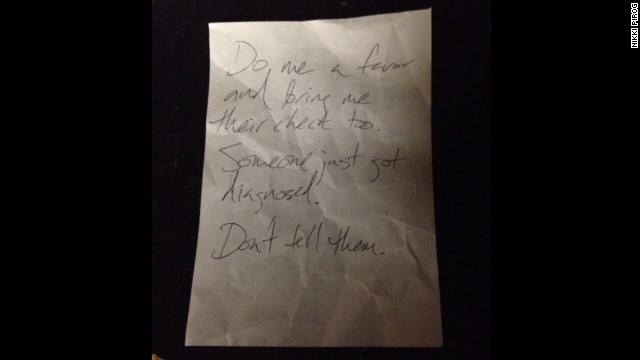
She didn’t know what had happened until the man passed her his bill with a credit card and this note: “Do me a favor and bring me their check too. Someone just got diagnosed. Don’t tell them.”

“I combined the two checks, and he paid for both,” Pirog told CNN in an e-mail. “Neither of us really spoke of what took place, as he had obviously not wanted to make a big deal out of it. He wrote me a second note on his new bill thanking me for my help, and telling me to relay the message ‘Best Wishes’ to the ladies when they were ready to leave. When the ladies were ready for the check, I told them the man near them had taken care of it, and the mother was overwhelmed with emotion, which I have to admit almost got to me too.”

Pirog first posted a photo of the man’s note on Reddit. She was compelled to share it because “I’ve never really had anything this moving happen to me while at work,” she said. “People sometimes need to be reminded that there is good in the world.”

There’s something about restaurant customers’ acts of kindness that people just love to share online. Last month in North Carolina, a story about a stranger who left a touching note when paying for a family’s meal went viral.

Leave a comment

Filed under Uncategorized