Poem of the Week: For All This

Sunrise

For All This

 for the victims and survivors of the Oklahoma tornadoes, May 20 and 21, 2013

It’s a matter of degree and distance and accretion, after all—
The objects, possessions, acquisitions, events, memories and conversations gathering
Under a roof, adding on to themselves, second to second, year to year.
In the kitchen, pots and pans, glassware, silverware, plates, cups, appliances.
For the rest, furniture for the living room, dining room, family living area, bedroom:
Sofa, chair, desk, bed, table, bureau, chest,
The accumulations of a household, the toys, the clothes, the food, the tools
And the family itself, again a matter of degree and accretion
Two people—a start—then the little one added and another perhaps
They grow and go to school and they grow.
And there are breezes, a matter of degree and accretion again,
They become winds and air masses which collide
Warm and cold, and the winds start a slow rotation
They turn and turn and turn
And coil on themselves. Mere wind becomes
A miles wide obscene ram of air a coiling snake
Crushing exploding bursting apart
All these accretions
All these possessions
The objects
The persons
The children huddled in their school
Leaving
A tattered unimaginable horrid landscape
Of grief and loss.
It’s a matter, after all, of degree and accretion
Of which we are suddenly
And brutally
Bereft.

–Dan Verner

Leave a comment

Filed under Uncategorized

The Instruments of the Orchestra

Instruments of the orchestra

The Instruments of the Orchestra

We went to the Hylton Center a while back to hear an orchestra concert, and it occurred to me during intermission that I could identify all the instruments in the orchestra by sound, which might have been because I couldn’t see the oboist, bassoonist or trumpet player until they stood up for a bow. I knew they were there, though. Now, being able to identify instruments in an orchestra is no big thing, especially if you are semi-musical as I am. But it got me to thinking about how proud my elementary school teachers would have been of me if they had known I could do this. It was part of their mission, after all.
If my elementary school had a mission statement, which it didn’t since no one had thought of such a thing at the time, it would have been something like “to prepare boys and girls for further education and to make them civilized, cultured, and contributing members of society.” The school worked not only to improve us intellectually but also culturally. I remember our sixth grade teacher telling us repeatedly, “You will not grow up to be a burden on society. You will be ladies and gentlemen who will contribute to the good of the country and the world.” Well, I have tried.
An important part of culture for our teachers was, of course, music, and music was an important part of school. There was no such thing as musical specialists then (who, by the way, do a wonderful job in our schools today) and so the classroom teacher led music, with singing and theory, music history and so on. Part of this curriculum included listening to orchestral masterworks and learning the instruments of the orchestra. Almost all the teachers seized on Prokofiev’s Peter and the Wolf to do this.
Unless you have lived in total seclusion for most of your life, no doubt you have heard Peter and the Wolf. If you’re like me, you had to listen to it several times a year. The main musical feature of Peter and the Wolf is that each character is represented by an instrument and has a musical theme. Peter’s is played by the strings. There’s also a bird (flute), a duck (oboe), a cat (clarinet), grandfather (bassoon), the wolf (French horn) and hunters (woodwinds, timpani and bass drum). Once you’ve heard the work a time or two, you’ve got those instruments. We knew them well by the time we went to intermediate school. It could have been worse, I suppose. Some teachers had an “instruments of the orchestra” record and forced their students to play what my wife calls from her music degree days in college “drop the needle.” (Attention younger people: this was done with something called a record player which produced sound by running a special needle over a disk of vinyl. I am not making this up.) I did get to play drop the needle with the instruments of the orchestra record in seventh grade and was not very good at it. Thank goodness for Peter and the Wolf.
Unfortunately my eight grade music class was taught by a lady who hated students and I think hated her job. She made fun of the boys because our voices came out in unpredictable ways and was in general surly and irritable. I sat in class hoping we would be invaded by aliens and taken off to other worlds where my teacher wouldn’t be. I think I managed to survive by fixing my attention on a large chart on the wall of the music room showing the instruments of the orchestra. I looked at it so long and so desperately I learned their names and eventually their sounds. I suppose it’s a good example of finding something useful in even a bad experience. It took me about eight years, but I eventually got back to loving and appreciating music. That helped me not be a burden on society, and for that I am grateful.

Leave a comment

Filed under Uncategorized

The Myth of Fingerprints

Umbrellas

Actually, this is not about myths or fingerprints. I just liked the line from the Paul Simon song, “All Around the World, or, The Myth of Fingerprints.”

Rather, this is about umbrellas. My younger daughter Alyssa has a theory about the number of umbrellas every individual needs.

Actually, it’s not a theory at all (I’m full of misdirection today). It’s a sensible plan for making sure you have an umbrella wherever you go.

Alyssa says each person needs six. Two for work, two for the car and two for home. More doesn’t hurt. That way you can loan them to people who need them. Then they will like you and be your friend.

My problem with umbrellas is that I leave them places. I wonder how many I’ve left at different times and venues.

They, like pens, are regarded by most as community property. When was the last time you heard of someone being arrested for stealing a pen? Or an umbrella?

I actually have six umbrellas (I drive two cars, but not at once. I’m not THAT talented). My office is at home, so that cuts the number down by two. In our household, we have about ten or twelve of them. I think. I never stopped to actually count them. I just know they’re where they should be when we need them.

They’re for a rainy day, after all.

Leave a comment

Filed under Uncategorized

Friday Poem of the Week: Life as a Metaphor for Baseball

Zimmerman at Bat

Life as a Metaphor for Baseball

Listening to my team lose on the radio this afternoon
I thought about all the phrases baseball players use to encourage each other
Like “Easy out!” and “I got it!” “Make him hit it to me!” “We got this one!”
And “Wait ‘til next year!”, and also
About philosophical outlooks: everybody gets three strikes and
You’re alive until you strike out or fly out or ground out
But then you might hit it big and homer for a grand slam
And every team gets twenty-seven outs and the game isn’t over until it’s over
You win some, you lose some, and some are rained out,
But you have to dress for them all.
So keep your eye on the ball, choke up and just try to meet the pitch,
Swing level, follow through and see what happens.
And oh yes, hold your head high, cheer up and be of good faith:
Here comes another pitch.

–Dan Verner

Leave a comment

Filed under Uncategorized

Small Actions, Large Effects

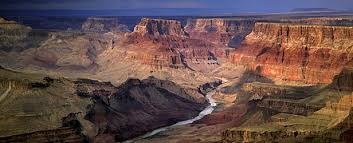
Grand Canyon

I don’t know if you have ever thought of the effects of small actions. Without the erosion caused by innumerable drops of water over thousands of years, there would not be the large and incredible spectacle of the Grand Canyon or Niagara falls. Without billions upon billions of tiny snowflakes piled up over centuries and centuries and years there would not have been the slow movement southward of the great glaciers of the North American continent and their gradual retreat. And the Great Lakes, which are really inland seas, would not exist.
Wesleyan University, where I started college, had several buildings which dated to 1831, when the school was established. Some classrooms buildings which were built around 1890 were still in use when I was there in the middle 1960’s. These structures had wide stairs made of slate leading to the upper floors. Now, slate is rated a 6.5 on the hardness scale for minerals. The scale runs from 1 (talc) to 10 (diamond), so slate is not a softy but neither is it a girl’s best friend. And yet those steps, as hard as they were, were hollowed in their centers by the action of hundreds of thousands of footsteps over the years. Small matters do add up.
I was thinking about this a few weeks ago when I decided to take all the change that I had squirreled around the house in assorted bins and boxes and jars and pockets and have it counted at the coin counter at the credit union. I chose that one because they didn’t take a cut of the payoff. I expected my haul would total less than fifty dollars. Instead, as the counter churned and churned some more and heads turned all over the office to see who was cashing in big, my haul came to over a hundred dollars, which I promptly deposited in our credit union savings account since I did not want to face you if I had spent it all on ice cream at Nathan’s. I couldn’t eat that much ice cream at one sitting and you were all at work. I know you understand. And it was cold out.
The point of all this is that small actions done for the Lord do have large results. We are reminded that all Mother Teresa wanted to do was provide a decent place for the poorest of the poor in the slums of Calcutta to die in dignity. And I’m sure you can think of other examples of small deeds which have had large results.
There’s a story told from the earlier days of aviation of an airplane loaded with orphans which was running out of fuel and needed to land at night on a local airstrip. The power failed as the aircraft was some distance out, meaning that it would be impossible to land safely on the airfield. The plane did not have enough fuel to divert to a field with power, but the airport manager thought quickly and called as many people as he could think of. (The landline phones still worked which was fortunate since cell phones had not been invented at the time story took place—and it’s also a reminder that it’s a good idea to hang on to your land line in case the power goes out.)
As I was saying, the manager asked the people to drive their cars to the airfield. They lined up on either side of the runway with their headlights illuminating a safe path for the airplane. It landed successfully because of the coming together of the light from the cars. A number of souls were saved that night, and this story serves as a parable about what we can do if we do indeed let our light shine before people, in small actions, small deeds of kindness and small words of consideration.

Leave a comment

Filed under Uncategorized

Fixing the Beans

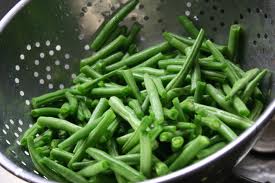
Green Beans

Fixing the Beans

I would like to be a better cook, but I don’t stand a chance. I am part of a family of phenomenal cooks, including my wife, my mother-in-law, my sister-in-law, and my daughters. When it comes to special family meal occasions, they do the heavy lifting and I am consigned to making the iced tea and rice (Uncle Ben and I are tight like that). I can make a few things, but at this point I don’t think I will ever achieve Paula Deen or Rachael Ray status.

There are even specialities within the family menu: my mother-in-law makes wonderful deviled eggs; my sister-in-law does incredible rolls and baked products; my younger daughter has a deft touch with a taco dip; my older daughter has green bean casserole (GBC) all tied up; and my wife fixes green beans that could serve as a meal by themselves. Recently she ran into a time crunch before a family meal and asked me to snap the beans. I was excited to be asked to be part of a signature dish. I cut the ends off the pile of beans and then broke them into pieces. I am here to report that beans, or at least the ones we used, do not have the strings they used to. The agronomists have done some good work over the years. Back in the day you ended up with a piled of bean strings as big as the pile of beans. And they were tough enough to weave a rope that Indiana Jones could use.

While I was snapping the beans I found I soon fell into a rhythm that was comfortable and familiar. Then I remembered all the times my mother asked me to help her string beans. It was not my favorite chore–in fact, I didn’t have any favorite chores since I was a lazy slug and preferred reading and watching television. So I would reluctantly string the beans, missing enough that my mom had to go back through then. When I broke them up, I broke them into large pieces that would take less time. Again, she had to redo them. It’s a wonder she asked me to help. Maybe she was thinking I would catch on. I’m pleased to report that I did, decades later, and can break beans with the best of them.

Sometimes we learn from our parents in ways we’re not even aware of later on. My love of poetry and music came from my mother. She would walk around the house reciting poems she had memorized, Tennyson and Browning mostly, and I ended up majoring in English (with more poetry classes than anything) and teaching English for over 30 years. She also sang as she worked in the house or the garden, and music has been an important part of my life from the days of teaching myself to play guitar to currently being in four musical groups. She was also an inveterate reader, as I am.

Of course, not all of her interests took. She was a master gardener, and I can’t make anything grow. Gardening always seemed like hard work to me. I know, there are rewards but I can’t seem to get to them. A number of years ago I told her I was considering putting in a vegetable garden. She looked at me and said, “Just go to the farmers’ market instead.” She knew.

I never thanked my mother as such for these interests that she gave me, but I believe she understood without my saying how much they meant to me. She wasn’t much on expression through words or overt recognition. She didn’t care at all for Mother’s Day, thinking it was a false and extravagant occasion. She said, “Everyone is nice to their mothers on Mother’s Day and mean to them the rest of the year.” I told her I would be mean to her on Mother’s Day and nice to her the rest of the year. I always saw her then or if I couldn’t, I’d call her and tell her I was doing so because that’s what you were supposed to do on Mother’s Day.

So, with these thoughts in mind, I hope you will express your thanks to your mother for all she has done for you if you are able. If you do not have a good relationship with your mother, I hope there was someone who acted as a mother for you. If you are unable to tell your mother in person, I hope your memories of her are good and strong. And to all you moms and all you women who have acted as moms, thank you.

6 Comments

Filed under Uncategorized

Poem of the Week: Train Station

Train Station

Train Station

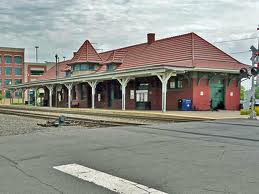
Imagine a small red brick train station

On dual tracks of the Southern line

Mansard-roof, red clay tiles

Waiting room, luggage room, ticket office.

Go sit on one of the green-painted benches

On the platform

Listen to the rain and

Wait. Wait patiently if need be and

When this poem pulls in

Climb aboard.

–Dan  Verner

Leave a comment

Filed under Uncategorized

Knuckling Down

Knuckles

Knuckles

I was fixing something in the microwave a few days ago, I don’t remember what since all my signature dishes are made in the microwave, and I had something from the food on the tips of my fingers. Not wanting to mess up the pads with my ingredients, I used the knuckle to my index finger to set the oven. It occurred to me then that knuckles are fairly useful and perhaps underappreciated.
Anatomically, of course, we have three knuckles on each finger (although the one next to the finger tip isn’t used for much except light rapping) and two on the thumb. Without our finger and thumb joints we wouldn’t be able to manage such hallmarks of civilization as holding a baseball bat. We might as well have a couple of paddles at the ends of our arms. Good for table tennis, maybe but not so useful for holding a pen or playing the guitar.
Our language reflects the importance of our knuckles. When we become serious about doing something, we knuckle down to it. This expression most likely came from the game of marbles when the player was ready to put his marble in play by literally putting his knuckle down on the ground. The bunch of kids I hung with never played marbles although I grew up in the long–ago days before video games. There are a number of variations to marbles and even different terms for different types of marbles, but you’ll have to look elsewhere for an explanation. I’m about as clueless about marbles as I am about cricket.
There are number of other expressions involving the knuckles. I learned about one of them in a very direct fashion. When I was in fifth grade and in fact for much of elementary school I had a smart mouth (Faithful Readers will be astonished to learn this, I know). I kept shooting off my mouth to the resident gang of juvenile delinquents who were all about sixteen years old in the fifth grade. One day at recess I said something smart to one of them and he asked me if I wanted a knuckle sandwich. Any sort of sandwich sounded good to me and I said, “Sure” and he popped my in the mouth with his fist. I think I was so surprised that I didn’t even feel it, but from that time on I knew for certain what a knuckle sandwich was. You could also say I knuckled under.
In sports, there was once bare knuckle boxing, and the phrase has come to mean going at a particular task without much equipment or preparation, like playing football without a helmet. Then there is the knuckle ball, a pitch in baseball thrown with the knuckles which moves in unusual ways. Catchers who caught knuckleballers had to develop special oversized gloves to handle the erratic way the pitches moved.
In general, “white knuckled” has come to describe a terrifying ride generally either in a car or an airplane. And then there’s the expression “knuckle head” which we don’t’ hear much any more, It was my favorite uncle’s fond nickname for me when I was growing up.
“Knuckle” is also applied metaphorically to objects that look like knuckles. Couplers on railroad cars are called knuckle couplers. They replaced the earlier link and pin couplers which caused a lot of injuries.
Certain animals also have knuckles, and primates engage in what is called knuckle walking. They also do finger walking (literally, not through the Yellow Pages) and hand walking. Of course, they don’t have opposable thumbs so they can’t throw a knuckle ball. Pigs are said to have knuckles although that part of the ham is more properly their feet. Their knuckles are not like ours since they don’t have fingers. There is a reference to pickled pig knuckles in the last part of To Kill a Mockingbird. And everyone told me a degree in English was useless.
As Bubba Gump said about shrimp, “that’s about all I know about knuckles.” Maybe you know some more and you can share that knowledge with your friends.

Leave a comment

Filed under Uncategorized

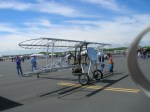
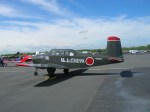
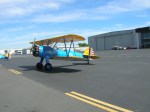
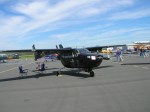
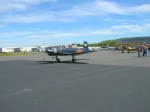
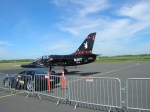
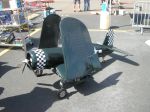
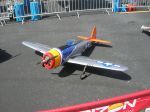
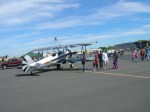
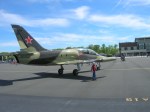
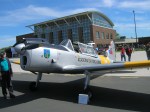
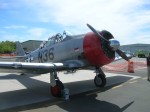
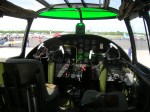
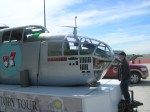
Picture Pages: Manassas Regional Airport Air Show 2013

Here are a few pictures I took during the Manassas Airport Air Show Saturday. Enjoy!

Leave a comment

Filed under Uncategorized

Poem of the Week: A Boy’s Wish

Sailboat

A Boy’s Wish

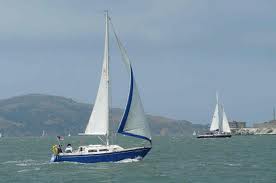
I want to live on a tidy sailing ship
Painted blue with sails of white
Not too big but just the right size
I’d call it the Mighty Mite.

I’d not go sailing on my boat
But live in it like a house
And I’d have some pets, maybe a cat
In case I had a mouse.

My boat would be so neat and trim
With everything in its place
A little kitchen and stove and all
Tucked in to save some space.

And in the night when it was dark
I’d read by lantern light
And go to sleep in my little boat’s bed
And snore all through the night.

I’d go to school like a regular kid
And they’d all envy me
And ask if they could visit
And I’d say, “Yes—just two or three.”

A sailor’s life is not for me
But I like to be afloat
With calm waters rocking gently
My pretty little boat.

So come on down and join me there
You can live on one as well!
There’ll be two of us then, you know,
And we’ll have lots to do and tell.

We’ll play pirates or pilots or adventurers
And pretend we’re not afloat
And then settle down and read some books
In my happy little boat.

–Dan Verner April 29, 2013

Leave a comment

Filed under Uncategorized