All About Cats

Cat at the Computer

I’m using material from a recent article about cat behaviors in the Washington Post by John Bradshaw for this post. Bradshaw offered some explanations for the sometimes winsome and sometimes frustrating behaviors that puzzle even the most dedicated cat lovers. He noted that  “Cats are the world’s most popular pets, outnumbering dogs by as many as three to one.” He attributes cats’ popularity in part to their “convenience.” They don’t need walking; they can be alone for days with water and some dry food; they don’t chew the furnishings like dogs (although they have been known to “mark” their territory in ways which upsets their owners. Indeed, the rub for many cat “staffs” (dogs have owners; cats have staff)  is that they can be your best friend at one moment (feeding time) and then wouldn’t cross the street to say hello the next.

Cats formed a unique partnership with humans between 10,000 and 15,000 years ago when granaries used by the inventors of agriculture in the Middle East attracted mice. The wildcats recognized a free lunch when they saw it, and moved in. They were more like  urban foxes, “born to be wild” and solitary, but willing to be around people in an arrangement that benefited both parties.

Early farmers also appreciated cats for qualities we still prize: soft and furry, they also showed a wonderful intelligence and an entertaining playfulness, even if that was on their own terms.

Cats are natural distrustful of each other, but can live together peaceably if they must share a food source. Even feral cats divide up available food, growing to colonies of several hundred in close proximity. In such situations, they evolved cooperative behaviors such as grooming each other (which for their humans means petting) and the raised tail which means they are receptive to being approached.  They also communicate by meowing, which has such a range of expression that their staff can tell what they are “saying.” I know when my cat Nacho wants to play or eat, or if she does not appreciate my attempts to play with her. And sometimes she tears around the house vocalizing in a way that can only be described as barking. My vet said she is a “dog in a cat suit,” which might explain this behavior. Cats also purr, which can be a sign of distress, as well as of contentment that  most people take it for. Animal behaviorist theorize that purring essentially means, “Please come here and settle down beside me.”

There’s no doubt that cats occupy a unique place in our lives. We have always had at least a couple in our household for the past 40 years, and we’re hopelessly smitten by them. It would be hard to imagine a day without a tabby or dilute tortie or any of dozens of breeds sleeping in the sun, playing with string, stalking a dust bunny or running at the sound of a can opener. For my money, there’s nothing like a cat for companionship, entertainment, protection (Siamese are particularly good at this), and, yes, convenience. Through millennia they have capered and stalked beside us on the long road to the present, and I pray they will continue on our journey together.

Leave a comment

Filed under Uncategorized

Sheddies

Shed of the Year

I read with interest a story in the Washington Post Magazine about people who use sheds for purposes other than storing garden tools. They function as studies, pottery studios, and even potting sheds. The movement began in England, where such people are called “sheddies.” One group of gentlemen converted their shed into a pub. Now it does not surprise me that this movement started in England. Let me say quickly that I have the greatest admiration for all things English. I taught English literature in high school for about twenty years and found a beauty and complexity in the writings as well as other aspects of the culture. I could listen to an English accent all day. And don’t forget they gave us the Beatles, (Of course, they also tried to give us cricket, but we’ll overlook that for the moment.)

What I’m leading up to is that Britons probably have more eccentrics per capita than any other nation on earth. I know we have our odd ducks who try to contact extraterrestrials by wearing aluminum foil helmets, but it’s fairly well known that the English lead the pack in this regard.

William John Cavendish Scott Bentick, the fifth Duke of Portland, for example, was a very shy man, who didn’t like meeting people and banned them from his home. He then went further and decided to live underground. He built a series of subterranean rooms, including an underground ballroom was built and a billiard room so big it could house a dozen billiard tables. These rooms and various others were connected by 15 miles of tunnels. One tunnel, a mile and a quarter long, connected his coach house to the local railroad station. That way, he could travel in a blacked-out carriage to the station where his carriage was then loaded on to a railway truck. When he reached his London home in Cavendish Square his servants were sent away as he climbed from his coach and rushed into the privacy of his study.

A Lord Rokeby decided that he would like to spend all his life near or in water. He spent hours in the sea off the beaches of Kent, and his servants often had to drag him unconscious onto dry land. Later, he built a vast tank built with a glass top, had it filled with water and spent nearly all his life floating in the water. He grew the most enormous beard which hung down to his waist and spread out on the surface of the water. All his meals were taken in his pool, to the embarrassment of his family. His obsession with water was so great that he had drinking fountains installed wherever he could and drank great quantities every day. He lived to be 88, so he was a good advertisement for drinking (if not living in) water.

My favorite English eccentric, though, has to be Lord Cornbury, Queen Anne’s cousin. The Queen made him her representative as Governor of New York and Jersey in America. Cornbury took it all very seriously and decided that since he represented a woman, he would dress as a woman. At the opening of the New York Assembly in 1702 he wore a blue-silk gown and satin shoes and carried a fan. He took to wearing the most sumptuous decorated hooped gowns in silk, spending all his money on himself and leaving nothing for his wife. She had to resort to stealing to clothe herself. He was ordered to return to England in 1708 but continued to dress as a woman and managed to remain a favorite of the Queen. Maybe they borrowed each other’s clothes.

Another favorite eccentric of mine is a Belgian man who started dressing as a penguin after his wife told him he walked like a penguin. His house is filled with penguin artifacts, and he often visits penguins at zoos, buying fish for them to eat. At some point he decided he actually was a penguin and began eating raw fish himself.

Anyhow, I don’t think I’ll be writing this from my shed any time soon. It’s dirty and rusty and would need several upgrades (including electricity and A/C) to make it habitable. It’s a nice place to visit to get my garden tools, but I wouldn’t want to write there.


2 Comments

Filed under Uncategorized

A Well-Deserved Honor

Image

Canadian short story writer Alice Munro has won the 2013 Nobel Prize in Literature, and I can’t think of anyone who deserves it more. For years, Munro has written engaging and beautifully styled accounts based on her life on the Canadian prairies. I was introduced to her work by her story “Boys and Girls,” which was a selection in the sophomore anthology we used when I taught English.

The story is available as a link and well worth anyone’s time to read it: http://womeninlit.tripod.com/alicemunro.htm  Congratulations, Alice Munro!


Leave a comment

Filed under Uncategorized

Round Robin

Round Robin

Our friend Mark Cooke, trumpet player extraordinaire and financial advisor par excellence, asked me the other day if I had ever heard of a round robin letter, and if so, where the term came from. I recalled hearing the term but didn’t know much about it, and certainly didn’t know the history of the phrase. I was familiar with the round robin tournament, in which every player or teams plays every other player or team until something else happens. There’s also a single-elimination tournament (you lose, you go home) and the double elimination tournament (you lose twice, you go home). A church softball team I was on several years ago was involved in a double elimination tournament. We were not competitive or very good, but we managed to win the first game. We hope we would lose the next two games quickly because the day was hot and we were tired. We did. I know, we were a terrible example for the youth of America. But we lived to play another year.

Mark described his family’s experience with the round robin letter as starting about the time of the Korean War. One family member would write a letter about that branch of the family, kind of like the Christmas letters everyone loves to hate. (We do one at Christmas every year but limit ourselves to about a page each. Our daughters and Becky are excellent writers so maybe it’s not so bad. As for me, you can judge for yourself every week how that works out.) That family member sends the letter to another one, who adds a letter and sends it on to the next member of the family in the chain. When the letters get back to the original writer, he or she removes the original letter and puts in an update. And so the robin has gone ‘round and ‘round in Mark’s family for over fifty years. I found some other articles about round robins that indicated they were popular in World War II as a means of keeps far-flung families in touch with each other. I was describing this phenomenon to a young person who said (facetiously, I hope), “Why didn’t they just use Facebook?” I suspect social media would have put an end to round robins even if old age and death of the writers hadn’t. We all know what has happened to letter writing recently, and it’s a shame. The round robin is a charming reminder of an earlier era when mail was delivered twice or three times a day in some cities.

As for the name, apparently it dates from seventh century French usage. It was called ruban rond (round ribbon) and described the practice of signatories to petitions against authority (usually government officials petitioning the Crown) appending their names on a document in a non-hierarchical circle or ribbon pattern (and so disguising the order in which they have signed) in order that none could be identified as a ring leader.

The practice was adopted by sailors petitioning officers in the Royal Navy (first recorded 1731)

The term round-robin is recorded in English much earlier, although not with the above meaning. It first appears in 1546 meaning someone who is round and called Robin (oddly enough), and appears later applied to troublemakers: “These Wat Tylers and Round-Robins being driven or persuaded out of Whitehall abc” (1671). Wat Tyler was, of course, the leader of the Peasants’ Revolt in England in 1381 and he led 50,000 peasants to London to demand an end to an oppressive poll tax. They were met by a large force of mounted knights and it was no contest between armored knights and largely unarmed peasants. Wat himself was killed. Apparently Round Robin was another dissenter about whom the details have been lost to history. It would be easier to take an insurrectionist named Wat Tyler seriously than one named Round Robin. Maybe Robin took his name from the practice of signing petitions in a circle.

In British usage, “round robin” applies specifically to Christmas letters. They seem to be the subject of more vehement vituperation than is usually accorded their American cousins. It’s my impression that the British roundly abhor anything that even mildly hints at bragging. Americans seem to regard sharing the family’s accomplishments as news that everyone is anxious to know.

So, maybe you, Faithful Readers, would like to bring back the custom of the round robin. They’re not nearly as amusing as passing a fruitcake around for decades, but they are much more informative.


1 Comment

Filed under Uncategorized

A Great Weekend

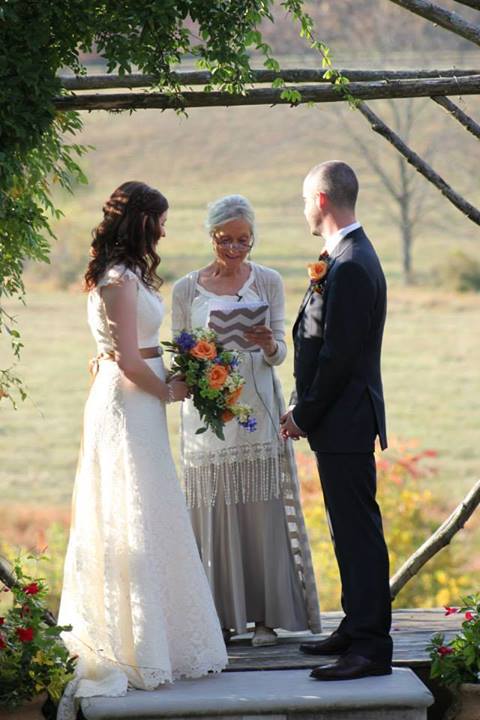
I’m a little late with this post, but other matters occupied me this weekend, chief among them the wedding of our daughter Alyssa to Chris Brown at Silverlake Farm in Loudoun County near Purcellville. Here are a couple of pictures taken at the event. My love and all the best to the couple!

Alyssa and Chris

Sisters

Leave a comment

Filed under Uncategorized

Little-Known Facts

Who Knew


In case you’re looking for something to amuse yourself with while you’re
furloughed…bless you!


Rubber bands last longer when refrigerated.

Peanuts are one of the ingredients of dynamite.

No one in Greece has memorized all 158 verses of the national anthem of Greece.

There are 293 ways to make change for a dollar.

The average person’s left hand does 56% of the typing.

A shark is the only fish that can blink with both eyes.

There are more chickens than people in the world.

Two-thirds of the world’s eggplant is grown in New Jersey.

The longest one-syllable word in the English language is “screeched.”

All of the clocks in the movie “Pulp Fiction” are stuck on 4:20.

No word in the English language rhymes with month, orange, silver or purple.

“Dreamt” is the only English word that ends in the letters “mt.”

All 50 states are listed across the top of the Lincoln Memorial on the back of the $5 bill.

Almonds are a member of the peach family.

Winston Churchill was born in a ladies’ room during a dance.

Maine is the only state whose name is just one syllable.

There are only four words in the English language which end in “-dous”: tremendous, horrendous, stupendous, and hazardous.

Los Angeles’s full name is “El Pueblo de Nuestra Senora la Reina de los Angeles de orciuncula” -and can be abbreviated to 3.63% of its size: “L.A.”

A cat has 32 muscles in each ear.

An ostrich’s eye is bigger than its brain.

Tigers have striped skin, not just striped fur.

In most advertisements, including newspapers, the time displayed on a watch is 10:10.

Al Capone’s business card said he was a used furniture dealer.

The only real person to be a Pez head was Betsy Ross.

When the University of Nebraska Cornhuskers play football at home, the stadium becomes the state’s third largest city.

The characters Bert and Ernie on Sesame Street were named after Bert the cop and Ernie the taxi driver in Frank Capra’s “It’s A Wonderful Life.”

A dragonfly has a life span of 24 hours.

A goldfish has a memory span of three seconds.

An American dime has 118 ridges around the edge.

On an American one-dollar bill, there is an owl in the upper left-hand corner of the “1” encased in the “shield” and a spider hidden in the front upper right-hand corner.

It’s impossible to sneeze with your eyes open. (DON’T try this at home!)

The giant squid has the largest eyes in the world.

In England, the Speaker of the House is not allowed to speak.

Frank Baum, the creator of The “Wizard of Oz” thought up the name for Oz when he looked at his filing cabinet and saw A-N, and O-Z, hence “Oz.”

The microwave was invented after a researcher walked by a radar tube and a chocolate bar melted in his pocket.

Mr. Rogers was an ordained minister.

Thelma Pickles was John Lennon’s first girlfriend.

The average person falls asleep in seven minutes.

There are 336 dimples on a regulation golf ball.

“Stewardesses” is the longest word that is typed with only the left hand.

2 Comments

Filed under Uncategorized

Do You Hear the People Sing?

Barricade

The government shutdown in D.C. closed all the monuments on the Mall. That included the Lincoln Memorial, the Jefferson Memorial, the Martin Luther King, Jr. Memorial, and all the other iconic places in Washington. (The Washington Monument is closed for repairs from the August, 2011 earthquake, so no harm, no foul in that case.)

Tourists and visitors who had come to the city could look at the monuments from a distance, but not go very close to them. Visitors included a group of World War II veterans here courtesy of Freedom Flight, a group which flies vets in to visit the World War II Memorial. Barricades stood in the way of anyone who would want to actually walk the monument grounds. Then something wonderful happened. The barricades were moved aside. Some Congressmen who were there said they didn’t know how it happened: someone did it, and the vets could visit this incredibly meaningful and poignant place. They had earned it, after all.

I have an idea that the men and women who stormed the beaches at Normandy and Iwo Jima were not going to be deterred by a few metal stands. I have tremendous admiration for these men and women who served actively and those who kept the home fires burning. My novel (due out October 22), On Wings of the Morning, is a tribute to this generation. And I’m glad to see that they still have the right stuff. You rock my world, World War II vets!

Leave a comment

Filed under Uncategorized

Punctuation Marks I Wish We Had

Interrobang

I don’t know if you recognize the punctuation sign above. You might if you are of a certain age. Time magazine first proposed it in the ’60’s as a way of conveying excitement and interrogation. It’s called an “interrobang” and it would be used in a sentence like this:

“What in the Sam Hill were you thinking ” Or, if you can’t do the funky thing with your fonts, you can write “!?” or “?!” but it’s not as cool looking.

There’s an article in Mental Floss about other punctuation marks we could use. I’d like to. I especially like the rhetorical question mark and the irony mark. Maybe because I frequently am. Rhetorical and ironic, that it. Maybe you will like these as well. Here’s the link to the articlePoint d'acclamation.svg

http://mentalfloss.com/article/12710/13-little-known-punctuation-marks-we-should-be-using

Leave a comment

Filed under Uncategorized

Windows and Walls

ATM

Recently I went to visit the ATM at my local bank, and something was different. The ATM had been moved down a few feet, and the driveup windows were gone. In their place was a blank brick wall. I thought at first that they had closed the drive-up, which didn’t make any sense because the lanes and carrier machines were still in place. I went in and asked them what happened to the drive-up windows. They said they had been bricked over for security reasons and the tellers used closed-circuit cameras. I also noticed that the tellers inside the bank were behind what I assumed to be bullet-proof glass. I didn’t ask any more questions so they wouldn’t think I was casing the joint.

I suppose that the most determined thieves would not be deterred by a brick wall although it would give pause to most. There are also those geniuses who try to pull ATM’s out of the wall. My question is, once they have it, what do they do with it? You can’t exactly ride around with an ATM in the back of your pickup without attracting a lot of attention. Anyhow, it’s a sad day when banks feel they have to close up their drive-through windows and put their tellers behind glass.

We have all become used to increased security since 9/11, which has manifested itself in subtle and not-so-subtle ways. Everyone knows about the 3-ounce liquid limit with carryons and taking our shoes off at security while flyi8ng. It could be worse. I taught with a woman who made frequent trips to Israel on El Al. She said that the security process before a flight could take four to five hours. Every bit of luggage was searched and checked by bomb-sniffing dogs, and every passenger was questioned, sometimes several times, by security people toting semi-automatic weapons. If your luggage or your story was the least bit out of line, you didn’t fly. Now that’s security.

We hear about conspiracies and plots when suspects are arrested, although I believe we don’t know half of what is going on. It’s just as well—all this attention to security can create a sort of semi-permanent anxiety and paranoia. Even the church I go to has security people and a security plan with three levels depending on the severity of the threat. At first, I thought a church of all places would be safe, but as we know there have been shootings of pastors and shootings inside churches. Schools were similarly considered safe until Columbine in 1999. All this has become part of our lives.

Given the situation, what do we do? I would suggest that we do what I see most people doing—go calmly about our business. The statistical probability of dying in a terrorist attack is quite low, so we can relax know we’ll probably die of something else. Focusing on the relationships and faith we have and contributing to our communities are the best ways we have to provide for our own safety.

We should be grateful for those who guard us. As George Orwell is reputed to have said, “People sleep peaceably in their beds at night only because rough men stand ready to do violence on their behalf.” I would amend “rough men” to read “courageous men and women.” I know I could not do what they do.

It’s no surprise that the world is, and always has been, a dangerous place. Personally, I remember the “duck and cover” drills in the ‘50’s where we practiced what we would do in the event of a nuclear attack. The answer was, cower in fear, which we did. My class one year was to go outside in the hall and cower next to a large wall made of glass brick. Even as a nine year old, I thought this was not the best idea I’d ever seen. We could have used my bank’s blank brick wall, but thank goodness it never came to that.

Dame Julian of Norwich, an English mystic who lived from about 1342 until about 1416, understood threat and upheaval. England during her time was visited by the Black Death, which took off up to half of the population. Peasants revolted several times during her lifetime, and the political situation was uncertain. Most people lived short, hard-working lives and never traveled more than eight miles from the place they were born. And yet, out of all of this, Julian wrote words that we can take to heart in our present situation: “All shall be well, and all shall be well, and all manner of thing shall be well.”


Leave a comment

Filed under Uncategorized

What I Learned from Baseball

Zimmerman at Bat

Well, it’s the end of another baseball season and once again my team, the Nationals, are not going on to the playoffs after an up and down season. They did have a strong finish after floundering for much of the season. I suppose I should be accustomed to this turn of events, having been a Senators fan while they were here. Now I’m a Nationals supporter, always having been a home teamer regardless of how good the home team was. It’s a time of year with a great deal of ambivalence. On one hand, watching Messrs. Zimmerman, Strasburg, LaRoche, Harper, Gonzalez, Rendon, Werth, Desmond, Ramos, et. al. ply their trade was often enjoyable; on the other, I’m glad they won’t lose any more games this year. Thanks for the high points, fellas, and for the reminder of what baseball can teach us. I’m not suggesting these are valid for anyone else: I am struck by how many life lessons baseball can teach us if we pay attention. Here are some lessons I’ve learned from the game:

Never give up. I was surprised this summer to see a major league player give up on a fly ball that scored a winning run. Sure, it looked like the runner would score and he did, but as our coaches used to tell us, anything can happen. The runner could fall down. Lightning could strike the ball. Make the play. Run it out. Never stop trying. If we did not run out a play to first base, we ran laps around the field after the game. A good life lesson as well.

Team work is important. Not even Willie Mays could play all by himself. It takes all nine positions working together to make it work. That’s why seeing a game in person is so important. Easily half the game is watching the players move around to back each other up. The catcher runs down the first base line on a throw to first, just in case. The cut-off man goes out to take the throw from the outfield. They’re all working together as a team to do what they cannot do as individuals.

Play your position. Do your job, and don’t interfere with anyone else doing theirs. This might seem contrary to team work but it’s actually an important part of it. In a double play, if everyone does his job, the work gets done.

Keep your eye on the ball. It’s no accident that this has entered the language as a means of saying “Focus. Think about what you’re doing.” It applies equally to hitting and fielding. If a fielder takes his eyes off the ball, you can bet something bad is going to happen. True also in life. Focus. Think about what you’re doing.

Work to improve. The teams I played on were so low down in the talent scale we could have looked for oil while we were there. And yet we had practice each week and tried to become better players. It didn’t make much difference, but it’s an important principle in life whether it is applied to baseball or writing or singing or running.

Practice, practice, practice. This is a corollary to the lesson above. Even professional classical musicians practice every day and they’re great at what they do.

The Tom Hanks Rule: There’s no crying in baseball. The one successful season a team I was on came when we were twelve years old in the minor league of Little League ball. Other younger teams cried when something went wrong or they lost. We didn’t. I think that’s why we were successful. But we cried the year before, just like the other teams. Makes it harder to play well.

Arguing with an umpire is like smashing into a rock. Nothing changes except you hurt yourself. There are some situations in life where you just have to walk away. Knowing when to do so is another important life skill.

Listen to your coaches. No matter how much you know about something, unless you are the unacknowledged Master of the Universe, there’s someone who knows more about a subject than you do. Look for those people who can help you. Listen to them.

Sometimes strange things happen. The balls hits a base or an umpire. A fan interferes. Sometimes unfortunate things happen. Shrug them off and go on. Sometimes fortunate events occur. Rejoice in them and go on.

Baseball will break your heart. Over and over again. Count on it. And there is much in life to break your heart. However…

There’s always hope. No matter how bad things look, never give up hope whether it’s in a game, a season or a situation. Hold on to that hope.

And, perhaps the most important thing I have learned from baseball…there’s always next year. Go, Nats!


Leave a comment

Filed under Uncategorized